

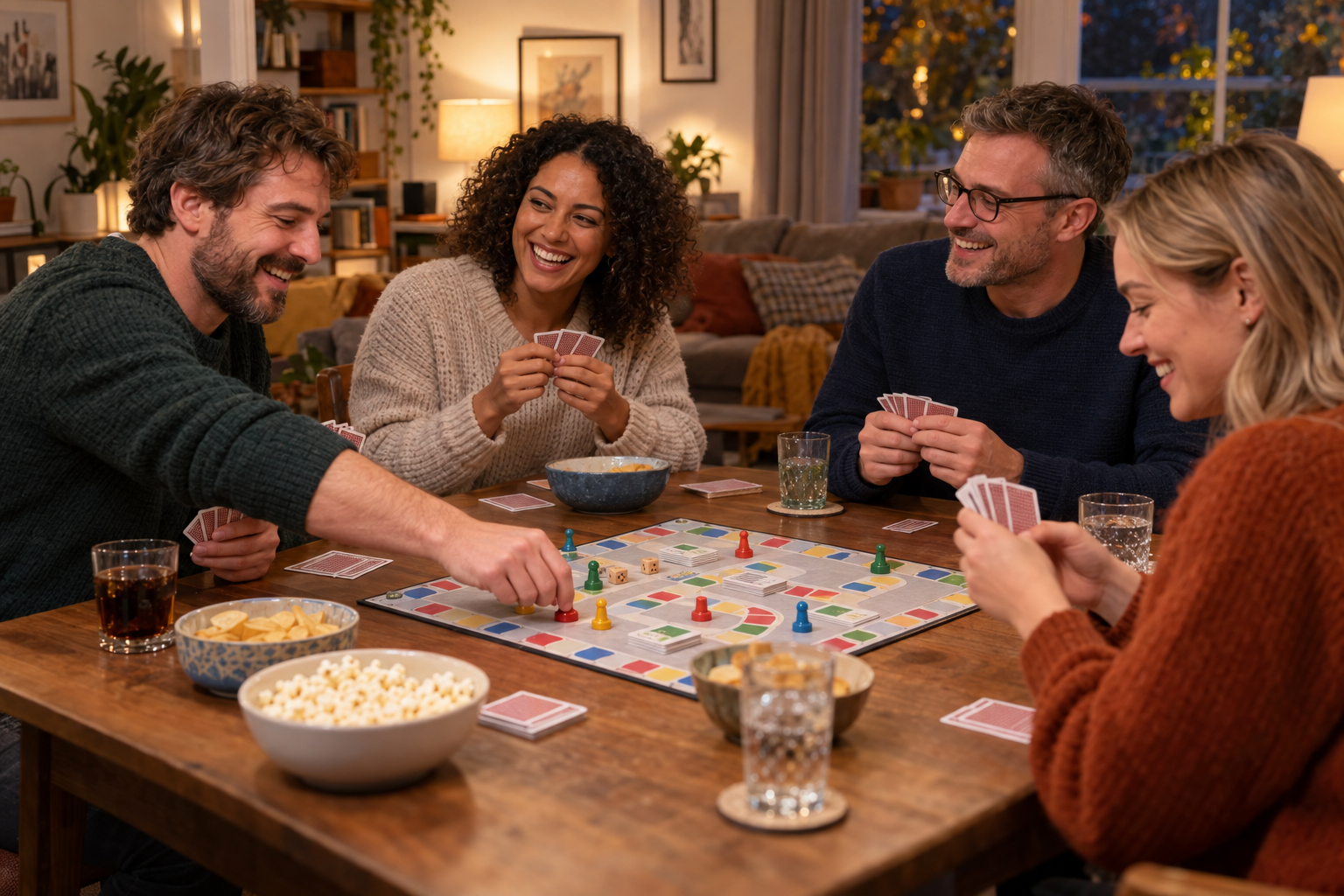
Meeting friends does not always need to involve restaurant bookings, expensive tickets or finding somewhere everyone can afford. Sometimes, a table, a few familiar games and something simple to eat are enough.
A games night at home can work particularly well during autumn and winter, when wet weather makes outdoor plans less appealing. It also gives you more control over the pace of the evening and what you spend.
The difficulty usually comes from trying to do too much. Buying several new games, preparing a large meal and arranging elaborate decorations can turn a relaxed gathering into another job.
A better starting point is to choose games that suit your guests, keep food straightforward and make sure everyone knows what to expect.
Quick Answer: How Do You Plan a Games Night at Home?
Invite a manageable group, choose games that suit the number of players and keep the rules easy to explain. Use games you already own or borrow from friends, agree any shared costs beforehand and prepare simple food that does not interrupt play.
Have one short opening game, a main activity and a flexible backup rather than planning every minute.
Start With the Guests, Not the Games
Before deciding what to play, think about who is coming.
A group of regular board-game players may enjoy a longer strategy game. Friends who mainly want to chat may prefer quick rounds, team challenges or something easy to join.
Check the likely number of guests before selecting games. A game designed for four players will not automatically work well for eight.
Also consider whether anyone would find small print, rapid reading, loud discussion or certain physical tasks difficult. A little thought beforehand makes it easier for everyone to take part comfortably.
Keep the Group Manageable
Your room and table should help determine the guest list.
Allow enough space for seating, game components, drinks and people moving around. A larger group may need team games or separate tables.
If you are hosting for the first time, a smaller gathering can be easier to organise. You can always arrange another evening once you know what works.
Choose Games That Match the Evening
There is no need to select the newest or most expensive game.
Choose according to the atmosphere you want. Quick party games can keep conversation moving, while a longer board game may suit a group that wants one main activity.
Think about the time needed to explain the rules as well as the playing time. A game may sound ideal until you discover that the first half-hour will be spent working through instructions.
Begin With Something Easy to Join
An opening game should help people settle in.
Choose something with short rounds and a straightforward explanation. This is especially useful when guests arrive at slightly different times.
Avoid starting a lengthy game before everyone is ready unless late arrivals have another comfortable way to join the evening.
Keep a Backup Available
Your first choice may not suit the group as well as expected.
Have a simpler alternative ready, such as a familiar card game, a short quiz or a word-based team activity.
Changing games is easier when the alternative is already available. You do not need to force everyone through an activity they are clearly not enjoying.
Use What You Already Own
Check cupboards and ask friends what they can bring before buying anything.
Someone may have a suitable game that rarely gets used. Borrowing gives you the opportunity to try it without adding another purchase to the evening.
You can also build a short activity around paper, pens and ideas prepared in advance. A picture round, drawing challenge or general-knowledge quiz does not require a large collection of equipment.
Check the Box Before Guests Arrive
Open the game and confirm that the important pieces are present.
Look for missing cards, dice, timers or scoring materials. It is easier to find a replacement beforehand than halfway through the first round.
Read the instructions too. For Hasbro games, the company provides an official instructions library where you can search for the relevant product. Match the instructions to your edition. Hasbro
Agree the Budget Before Spending
A games night can be inexpensive, but costs still creep up when the host buys everything without a plan.
Decide what you are comfortable providing. That might be a few snacks and drinks, or a simple meal followed by games.
If guests will contribute money, say so before making purchases. Avoid introducing an unexpected charge at the end of the evening.
For a takeaway, agree the order and how payment will work before confirming it. Include delivery and other charges when discussing the total.
Give Guests Clear Options
If friends ask what to bring, suggest something specific.
One person could bring a game, another a snack and someone else drinks they enjoy. This can reduce duplication and make contributions feel useful.
Keep requests reasonable. The point is to share the preparation, not to give every guest a shopping assignment.
Keep Food Simple and Practical
Choose food that fits around the games rather than competing with them.
If you are serving a meal, consider eating before the main game begins. Afterwards, smaller snacks are easier to manage around cards and playing pieces.
Keep messy food away from borrowed games and provide somewhere separate for drinks where possible.
Ask guests about dietary requirements before deciding what to serve. Keep packaging available when it helps people check ingredients.
Avoid Preparing Too Many Different Dishes
A long menu can mean extra spending and more time in the kitchen.
A few well-chosen options are often easier to manage than a table full of food that nobody finishes.
Think about portions, storage space and how much preparation you can complete before guests arrive. You should be able to enjoy the evening too.
Arrange the Room Before the Doorbell Rings
You do not need special decorations, but the room should be ready.
Clear enough table space for the main activity and make sure everyone can see the board or shared materials. Check that the lighting is comfortable for reading.
Keep bags, charging cables and spare chairs out of walking routes. Put drinks somewhere stable and have a spare pen or two nearby.
If music is playing, keep it low enough that people can hear instructions and each other.
Plan for a Small Living Room
A small room can still work if the games suit the space.
Choose activities with fewer components or use teams to reduce the number of individual playing areas needed.
Avoid balancing a large board across unstable surfaces. If your table is limited, select the activity around the space you actually have.
Explain the Rules Without Turning It Into a Lecture
Even a familiar game can have rules that people remember differently.
Give a short explanation of the objective, what happens on a turn and how the game ends. Then demonstrate a turn if that helps.
Agree any house rules before starting. This prevents disagreements later when someone discovers that another player has a different version in mind.
A practice round can be useful for games where the written instructions make more sense once people have tried them.
Keep Competition Comfortable
A little competition can make the evening entertaining. However, not everyone enjoys intense scoring or being put on the spot.
Mix teams where appropriate and choose activities that give different people a chance to contribute.
If an activity relies on specialist knowledge, balance it with rounds involving observation, wordplay or general questions.
You do not need prizes. If you want one, keep it small and light-hearted rather than adding another expense.
Make It Easy to Take a Break
Guests should be able to pause without feeling that they are disrupting everything.
Short rounds give people natural opportunities to refill drinks or step away. For longer games, discuss breaks before starting.
Avoid pressuring someone to continue if they would prefer to watch for a while.
Give the Evening a Flexible Shape
A simple structure helps, but a strict timetable can make hosting feel unnecessarily formal.
You might begin with a short game, pause for food and then choose a main activity. Leave room for conversation and changes of plan.
Let guests know the approximate start and finish times, particularly if they need public transport or have an early morning.
If the evening goes well, ask what people would enjoy next time. A shared hosting arrangement can make future gatherings easier.
Make Plans That Suit Your Friends
Hosting at home is one option among many. Some weekends suit a quiet evening; others call for a trip or an event.
If your group is considering a short break instead, Lost Society’s guide to planning a Dublin weekend from the UK covers travel and itinerary considerations.
For more ideas, browse our entertainment coverage and Lost Society homepage.
Frequently Asked Questions
How Many People Should I Invite to a Games Night?
Choose a number that suits your space and the games you want to play. Check player limits before inviting a larger group.
Do I Need to Buy New Board Games?
No. Start with games you already own, borrow from friends or prepare simple activities using paper and pens.
What Food Works Well for a Games Night?
Simple food that is easy to serve and keeps mess away from game components is practical. Check dietary requirements beforehand.
How Long Should a Games Night Last?
Agree a rough start and finish time that suits your guests. Allow time for explaining rules, food, conversation and breaks.
What If Some Guests Do Not Enjoy Board Games?
Offer varied activities, such as a quiz, drawing game or short team challenge. Avoid making one complicated board game the only option.
Should Guests Share the Cost?
They can, provided everyone agrees beforehand. Explain contributions before ordering food or buying supplies.