

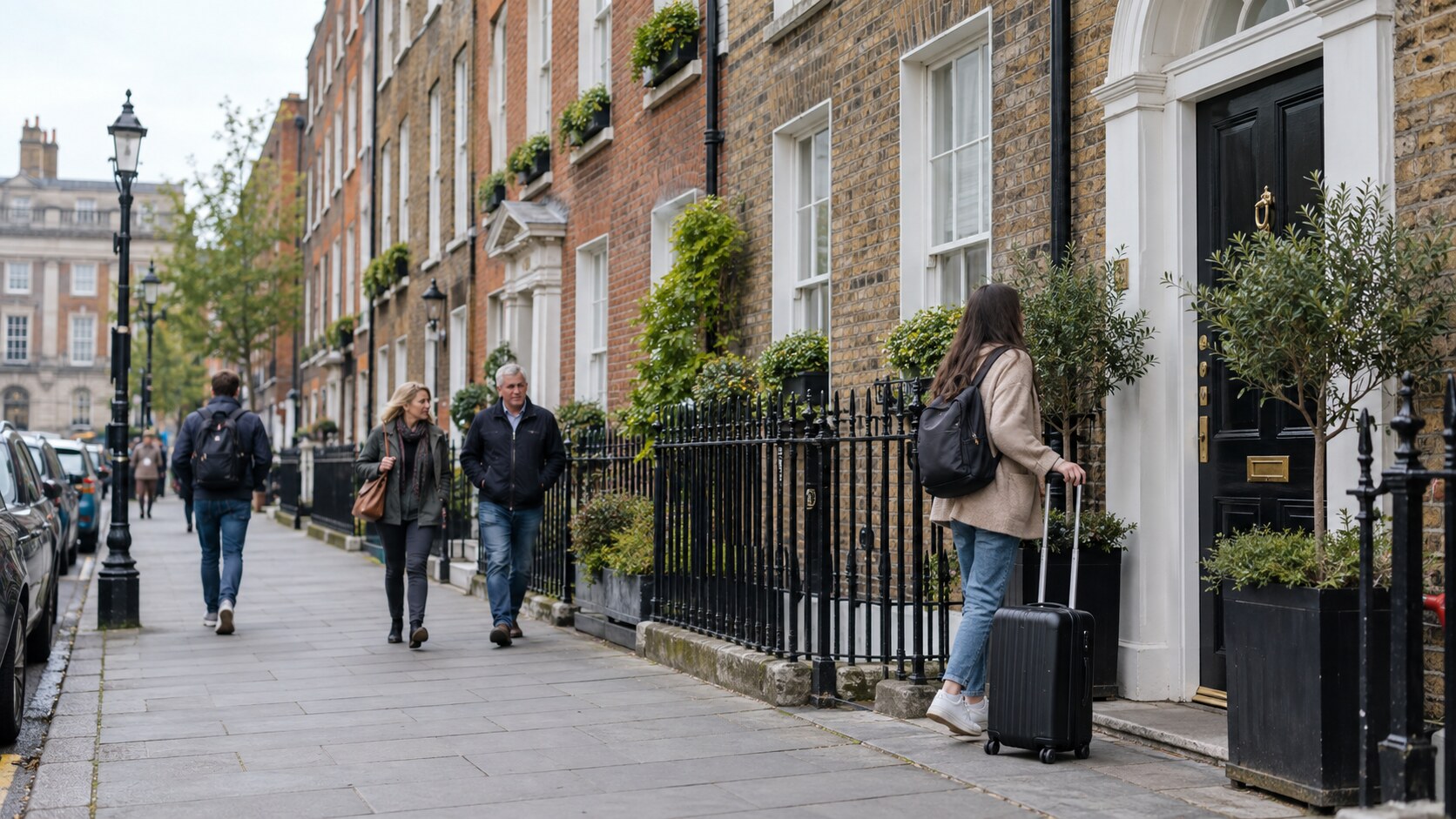
hort-term rental rules in Ireland could face further changes under a new European proposal designed to address housing pressure in popular cities and tourist destinations.
The European Commission’s proposal would create a common framework through which authorities could assess housing shortages and introduce targeted restrictions on platforms such as Airbnb.
However, this does not mean an immediate European ban on holiday rentals. The proposal must still be considered by EU member states and the European Parliament before it can become law.
For Ireland, the debate is particularly relevant. The country needs tourist accommodation, especially in areas with limited hotel capacity, but it is also dealing with a serious shortage of homes available to long-term residents.
Why Is the EU Targeting Short-Term Rentals?
Short-term letting has become a major part of European tourism. It allows travellers to find flexible accommodation while providing property owners with an additional source of income.
Problems arise when a large number of homes move from the long-term rental market into tourist accommodation. In areas where housing supply is already limited, residents may find themselves competing for fewer available properties.
The European Commission wants authorities to have a clearer and more consistent way of deciding when intervention is justified.
Under the proposal, an area’s housing conditions could be assessed using evidence such as:
- The relationship between local house prices and household incomes
- Changes in housing costs over time
- Population growth
- The availability of long-term rental properties
- Local housing supply and demand
According to Reuters’ report on the EU proposal, any restrictions would need to be evidence-based, necessary and limited to the locations experiencing housing pressure.
What Could the Proposal Mean for Ireland?
The proposal could give Irish national and local authorities greater certainty when introducing controls in high-pressure housing areas.
Ireland would not necessarily be required to apply identical restrictions in every county. Dublin, Galway and Cork, for example, face different housing and tourism pressures from smaller rural communities.
This distinction matters because holiday rentals can play contrasting roles across the country. In a city with a shortage of rental homes, converting residential properties into year-round tourist accommodation may add to housing pressure.
In a rural tourism destination, however, a short-term letting may bring visitors to an area where traditional accommodation is limited.
A balanced system would therefore need to distinguish between professional holiday-rental businesses, second homes and residents occasionally letting a room in their primary residence.
Internal link position: Link “housing pressure in Irish cities” to an existing Lost Society article about Ireland’s housing or rental market.
Will Airbnb Be Banned in Ireland?
There is currently no EU-wide Airbnb ban contained in the proposal.
Instead, authorities could potentially introduce proportionate measures in areas where reliable data demonstrates that short-term rentals are contributing to a housing shortage.
Possible measures could include:
- Limits on the number of short-term rental properties in a defined area
- Registration or licensing requirements
- Restrictions on how frequently an entire home can be rented
- Stronger checks on listings and planning compliance
- Different rules for primary residences and investment properties
The important point is that restrictions would need to address a specific local problem. A nationwide blanket restriction may be harder to justify if housing pressure varies considerably between regions.
Could Existing Hosts Keep Operating?
That will depend on the final legislation and any measures subsequently introduced in Ireland.
The EU proposal says restrictions should not be retrospective. This could offer some protection to established operators, although it does not guarantee that every existing host would remain unaffected.
Hosts should keep accurate records of planning permissions, registrations, bookings and tax information. Properties operating without the required permission could face greater scrutiny as data-sharing between platforms and public authorities improves.
How Short-Term Rental Rules in Ireland May Affect Hosts
Irish hosts should not panic or remove their listings solely because of this announcement. The proposal is at an early stage and still needs political approval.
Nevertheless, it is a useful warning that regulation is moving towards greater transparency.
Hosts may eventually need to demonstrate:
- That their property is legally permitted for short-term letting
- Whether the accommodation is a primary residence or separate investment
- How many nights it is rented during the year
- That listing information matches official registration records
- Compliance with relevant safety and tax obligations
Owners considering buying a property specifically for Airbnb should also assess the regulatory risk. Rental income calculated using today’s rules may not reflect what will be possible in the future.
Internal link position: Link “buying a property in Ireland” to a relevant Lost Society property, mortgage or home-buying guide.
What Could It Mean for Renters?
For renters, the intention behind the proposal is to protect more homes for long-term occupation in places where tourist rentals have reduced residential supply.
However, regulation alone will not solve Ireland’s housing shortage. Returning some properties to the residential market could help locally, but it cannot replace the need for new construction, renovation and better use of vacant buildings.
Airbnb has argued that insufficient housing supply is the central problem and that authorities should focus on building, renovation and empty properties.
Both issues can be true at once. Ireland needs more homes, while local authorities may also need tools to prevent residential areas from becoming dominated by short-term visitor accommodation.
Could Travellers Face Higher Accommodation Prices?
Stricter rules may reduce the number of holiday rentals available in certain locations. If demand remains strong, that could result in higher prices during festivals, sporting events and the summer season.
Travellers may also find fewer entire homes but more rooms offered within an owner’s primary residence.
On the other hand, a properly regulated market could provide greater confidence. Registration and compliance checks may make it easier for guests to identify legitimate accommodation and avoid listings that could be cancelled because they do not meet local rules.
Internal link position: Link “planning an Irish staycation” to an existing Lost Society travel or Ireland destination article.
When Could the New Rules Take Effect?
There is no confirmed implementation date.
The Commission’s proposal must pass through negotiations involving EU member states and the European Parliament. The final version could change significantly during that process.
Even after approval at European level, Irish authorities would need to decide how the framework applies to local housing conditions.
Hosts, renters and travellers should therefore distinguish between the proposal announced now and rules that are already legally enforceable.
What Property Owners Should Do Next
Owners do not need to make sudden decisions, but they should review how their properties are being used.
A sensible checklist includes:
- Confirm the property’s current planning status.
- Keep booking and income records up to date.
- Check whether the listing accurately describes the accommodation.
- Follow announcements from the Irish Government and relevant local authority.
- Avoid making long-term investments based entirely on current Airbnb income.
- Consider whether long-term or medium-term letting could remain financially viable.
Professional advice may be needed where planning permission, taxation or a property’s permitted use is unclear.
The Bigger Question for Ireland
The discussion around short-term rental rules in Ireland is ultimately about balance.
Tourism supports employment, local businesses and rural communities. At the same time, residents need access to secure and reasonably priced homes.
Effective regulation should target areas where short-term rentals are demonstrably adding to housing stress without unnecessarily damaging responsible hosts or destinations that depend on visitor spending.
The EU proposal will not transform the Irish rental market overnight. It does, however, show that governments are under increasing pressure to treat housing availability as a priority when regulating tourism accommodation.
For Irish Airbnb hosts, the best response is not panic but preparation. For renters, the proposal offers some hope of targeted action, although Ireland’s wider housing shortage will still require far more than tighter controls on holiday lets.